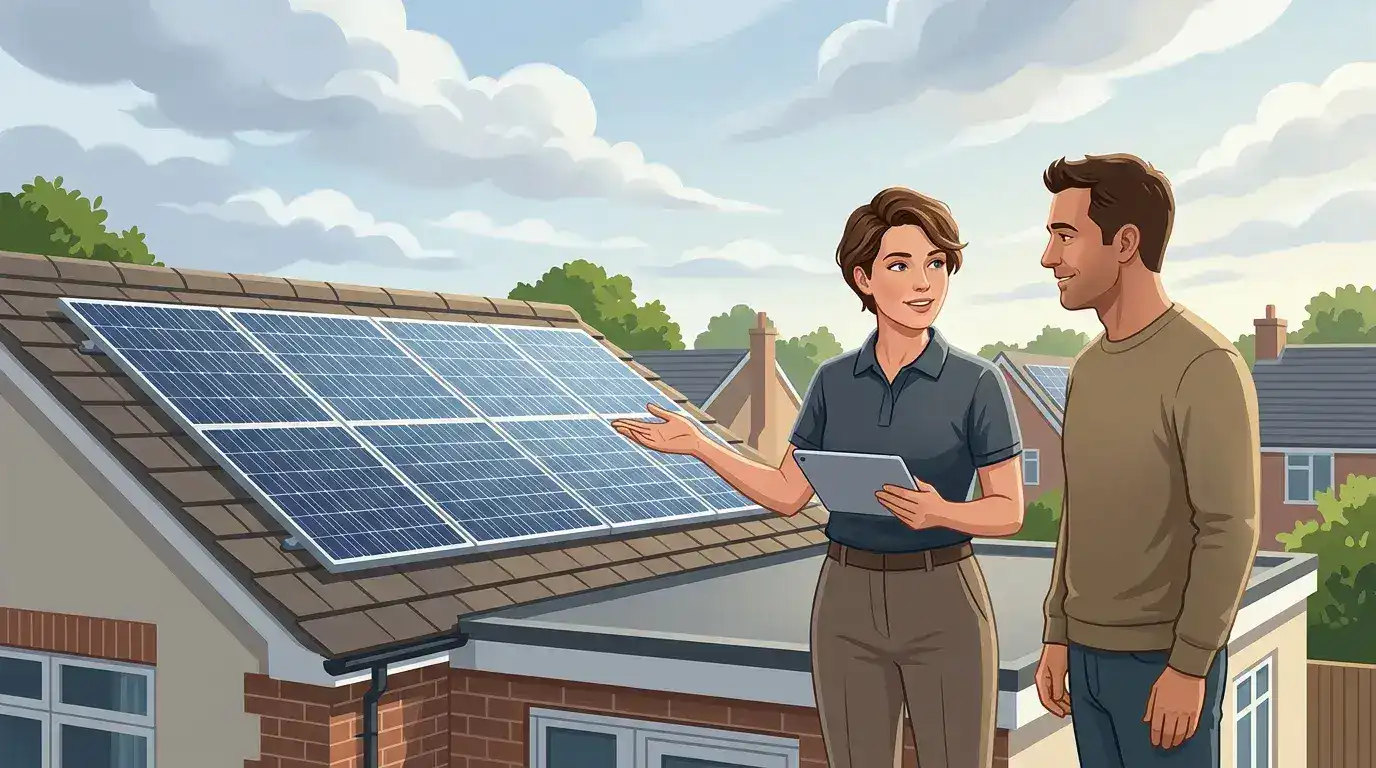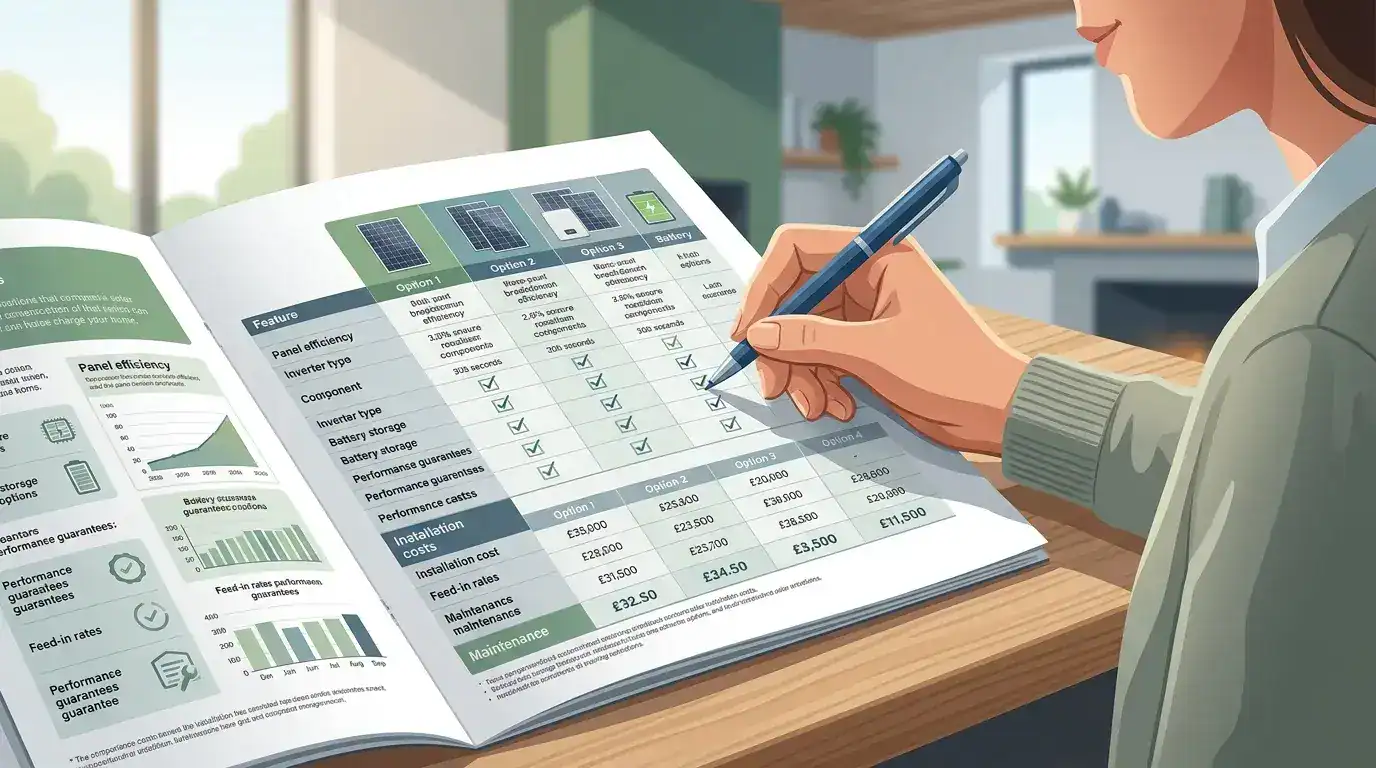
A proper solar shading analysis UK homeowners need is often the most overlooked part of a residential solar installation, and yet 66% of British householders now see solar as a major cost-saving opportunity, which means getting the shade right before you install is the difference between hitting those savings and watching them disappear behind a chimney. We want you to understand exactly why this matters before anyone climbs onto your roof.
Shade is the enemy of solar generation. Misjudge it and you'll spend thousands on a system that underperforms from day one.
Key Takeaways
| Question | Quick Answer |
|---|---|
| What is solar shading analysis in the UK? | A technical assessment of how shadows from trees, buildings, chimneys and the horizon affect your roof's output across the year, used to design the right system. |
| Why does it matter financially? | Even partial shade on one panel can drag down a whole string. A good analysis protects your break-even point and your return on investment. |
| Does it cost extra? | With a proper bespoke solar system design, shading analysis is built into the planning, not bolted on as a surprise fee. |
| What tools are used? | Modelling software, on-site irradiance readings, and increasingly drone surveys to map year-round sun paths. |
| Can shade be designed around? | Yes. Panel-level optimisers, microinverters and smart layout choices can recover much of the lost generation. |
| Who should do it? | An MCS-certified installer using real-world monitoring, not a doorstep salesperson with a generic quote. |
What Solar Shading Analysis in the UK Actually Means
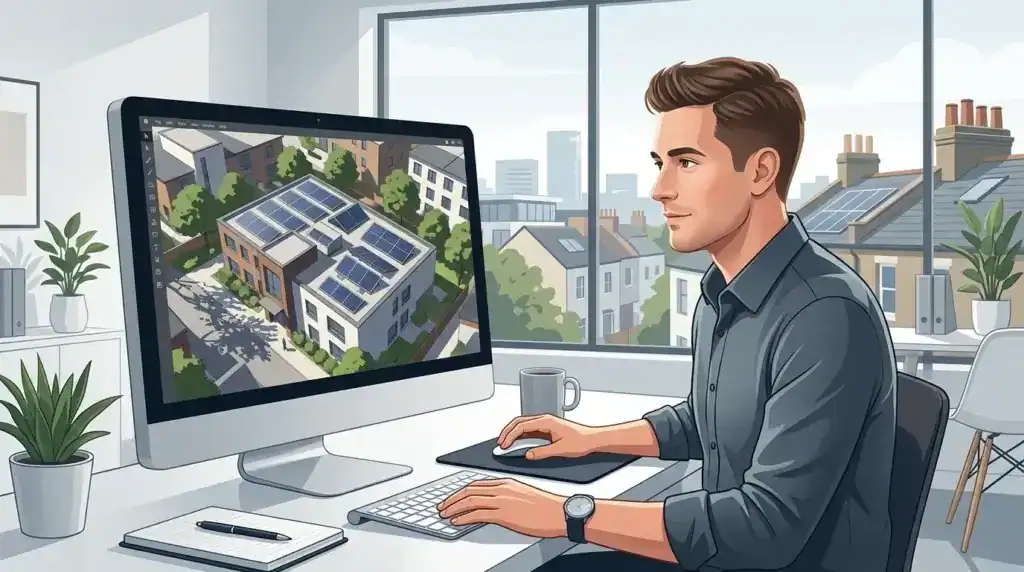
Solar shading analysis UK homes need is the process of measuring exactly how much shadow falls on your roof and when. It accounts for the sun's low winter arc, the height of next door's conifers, and that Victorian chimney stack you've stopped noticing.
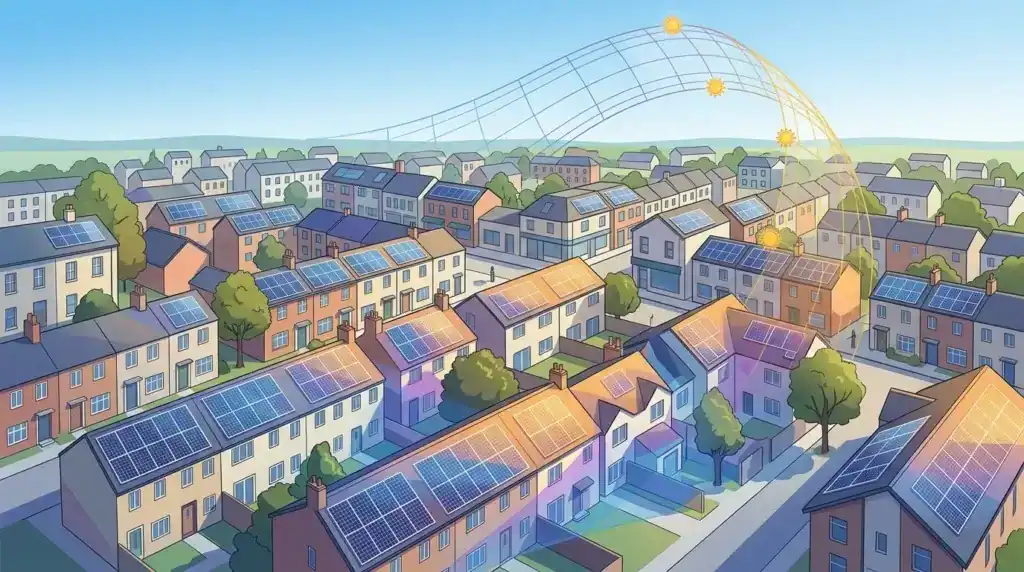
Britain isn't Spain. Our sun sits low in the sky for much of the year, which means shadows stretch longer and obstructions that wouldn't matter in southern Europe can quietly cripple a UK array.
The analysis turns that complexity into numbers. You get an honest picture of expected output, month by month, before a single panel is ordered.
Without it, you're guessing. And guessing with several thousand pounds of kit is exactly the trap we built Go Solar UK to help you avoid.
Why Shading Analysis Protects Your Money, Not Just Your Output
Here's the part the pushy salespeople skip. Solar panels are wired in strings, and a shaded panel can pull down the performance of every panel connected to it.
Shade one corner of one module and you might lose far more than that single panel's share. That's why a careful solar shading analysis in the UK is a financial exercise as much as a technical one.
The most useful anchor for any solar quote is the cost per kilowatt-peak (kWp) of installed capacity. But kWp on paper means nothing if half of it sits in shadow every afternoon.
Get the shading analysis right and your kWp works for you. Get it wrong and you've paid full price for partial performance.
Get those right and your system earns its keep for decades. Get them wrong and you'll spend thousands on capacity that barely turns a profit.
Want to know how much of your roof is genuinely productive? Request a free, no-obligation shading and system design assessment and we'll give you the honest numbers, without the sales pressure.
The Tools Behind a Proper Solar Shading Analysis in the UK
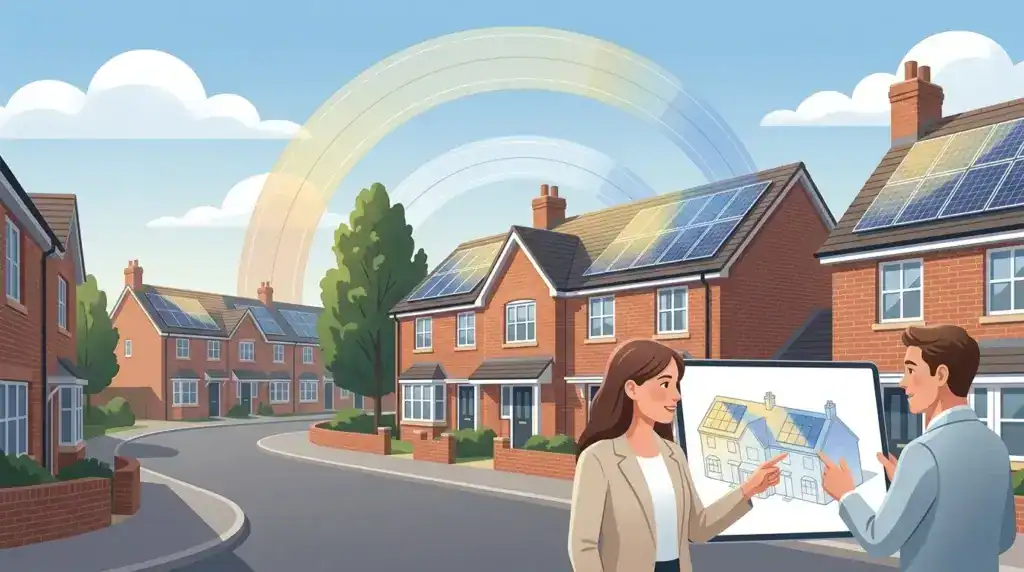
Modern shading analysis isn't a bloke squinting at your roof from the pavement. It's a structured, measurable process.
Here's what a quality assessment typically involves:
- Sun-path modelling: Software that plots the sun's position over your specific postcode for all 12 months.
- On-site irradiance readings: Physical measurements taken from your roof to capture real shadow patterns.
- Obstruction mapping: Logging trees, dormers, chimneys, aerials and neighbouring buildings.
- Drone and satellite surveys: Increasingly used in 2026 to build accurate 3D shade models without ladders.
- Seasonal stress-testing: Checking winter low-sun performance, not just rosy summer figures.
Each tool feeds the design. The output is a layout matched to your roof rather than a generic package pulled off a shelf.

Did You Know?
4 out of 5 solar users in Yorkshire and the Humber report their systems are saving them money, compared to only 3 out of 5 in Greater London, which shows exactly why regional shading and design analysis is essential.
Source: pv Europe
How Shade Affects Different Roofs Across the UK
Not all shade is equal, and not all roofs respond the same way. A south-facing roof in rural Suffolk faces very different challenges to a terraced home in central London.
Dense urban areas mean more neighbouring obstructions. Leafy suburbs mean seasonal shade from deciduous trees that vanishes in winter and returns in summer.
This regional variation is why we never offer generic quotes. A solar shading analysis in the UK has to be local, specific, and grounded in your actual surroundings.
The technology you choose interacts with shade too. Understanding your panel types and underlying technology helps you pick modules that cope better with partial shading.
Designing Around Shade: What Good Installers Do
A shading problem isn't always a dealbreaker. The right design can recover a surprising amount of lost generation.
Here are the main techniques an MCS-certified installer will reach for:
- Power optimisers: Fitted to each panel so a shaded module no longer drags down its neighbours.
- Microinverters: Each panel works independently, which is ideal for roofs with patchy shade.
- Smart panel placement: Keeping arrays on the least-shaded roof faces and avoiding known shadow zones.
- String configuration: Grouping panels so shaded and unshaded modules sit on separate strings.
- Shade-tolerant panel choice: Selecting modules engineered to handle partial shading more gracefully.
The shading analysis tells the designer which of these to use. That's the whole point of a bespoke solar system design in the UK, the layout follows your roof, not a sales template.
Curious whether optimisers or microinverters would suit your shaded roof? Get a free, tailored system design and we'll show you the options side by side.
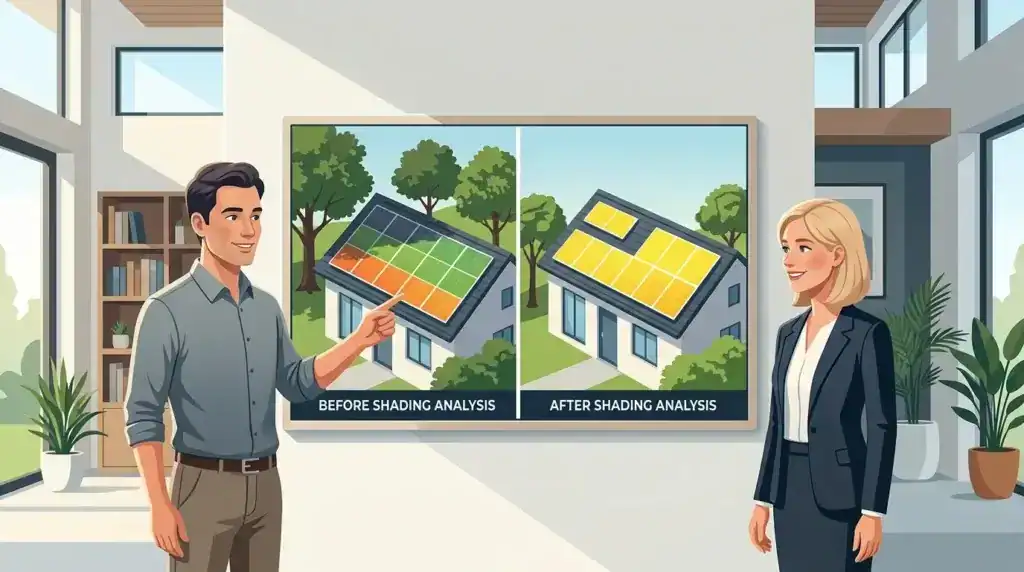
Why You Should Never Skip the Shading Analysis
We've seen what happens when corners get cut. A homeowner accepts a doorstep quote, the panels go up, and the bills don't budge.
The culprit is almost always shade that was never properly assessed. By then the kit is on the roof and the money is spent.
This is where standards matter. An MCS-certified installer is bound to assess shading as part of the design, and that certification is your legal and financial protection.
Skipping it is a false economy. A thorough solar shading analysis in the UK costs a fraction of the generation you'd lose over a 25-year system life.
Did You Know?
Around 1 in 6 solar installers may be working without proper qualifications, which underlines the real risk of skipping a professional bespoke design and shading analysis phase.
Source: Scottish Building Society
How Shading Analysis Fits Our Win-Win-Win Model
Our mission is simple: make clean energy accessible, affordable, and transparent for every UK homeowner. Shading analysis sits right at the heart of that promise.
Here's how the model works. The installer saves on marketing and lead generation, we bring them pre-vetted customers and handle the design, and you get a properly analysed system without inflated costs.
No marketing costs, no design costs, no expensive salesmen costs. That saving gets passed back to you, and the shading analysis is part of the package rather than an upsell.
What you do not want is a pushy salesperson, a generic quote, or a system designed to hit someone else's commission target. With us, no salesman will call, and the design speaks for itself.
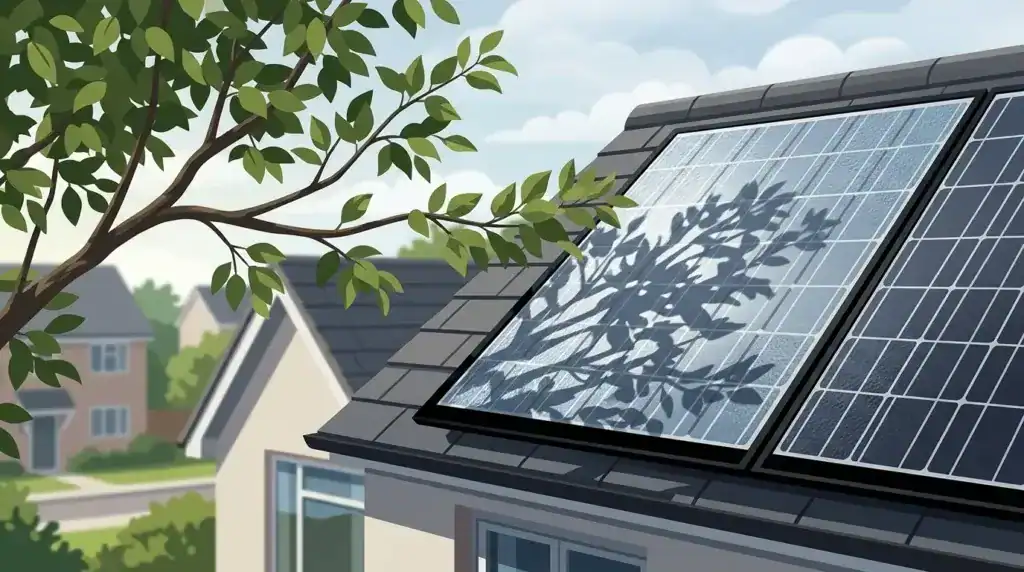
Spotting a Weak or Missing Shading Analysis
Sadly, not every quote treats shade seriously. Some skip it entirely and hope you won't notice until the panels are live.
Watch for these warning signs:
- No site visit: A quote produced purely from satellite imagery, with no on-roof measurement.
- Summer-only figures: Generation estimates that ignore the UK's low winter sun.
- Vague output promises: Numbers with no month-by-month breakdown.
- No mention of obstructions: Trees, chimneys and neighbours conveniently left out.
- Pressure to sign today: The classic doorstep tactic that rushes you past the detail.
If you spot these, walk away. Our guide to finding a trustworthy local installer sets out exactly how to protect yourself from retrofit and doorstep scams.
A genuine solar shading analysis UK homeowners need should be detailed, seasonal, and transparent. Anything less is marketing fluff dressed up as engineering.
Conclusion: Get the Shade Right Before You Spend
A solar shading analysis UK residences need isn't a luxury or an optional extra. It's the foundation that decides whether your panels earn their keep or sit there underperforming for the next two decades.
Sensible project planning uses conservative assumptions, stress-tests returns against real-world shade, and focuses on intrinsic value, reduced bills and energy resilience, rather than wishful summer figures. That's the honest picture every homeowner deserves.
Get the shading right, anchor your decision to cost per kWp, and insist on a bespoke design from an MCS-certified installer. That's how solar pays you back.
Frequently Asked Questions
What is solar shading analysis in the UK and why does it matter?
Solar shading analysis UK technical assessment includes how shadows from trees, buildings, chimneys and the low winter sun affect your roof's output across the year. It matters because even partial shade can dramatically reduce generation, so the analysis protects both your output and your break-even point.
How much does a solar shading analysis cost in 2026?
With a proper bespoke design, shading analysis is built into the planning rather than charged as a separate fee, especially through our Win-Win-Win model where design costs are absorbed by the installer network. Always be wary of quotes that either skip shading entirely or try to bolt it on as a surprise extra.
Can solar panels still work on a roof with shade?
Yes, many partially shaded roofs in the UK still make excellent solar candidates once power optimisers, microinverters or smart string layouts are used. The shading analysis is what tells your installer which of these solutions will recover the most generation.
Does shade affect winter solar performance more in the UK?
Absolutely. Because the UK sun sits very low in the sky during winter, shadows stretch much further and obstructions that are harmless in summer can block panels for hours, which is why any credible solar shading analysis in the UK must include seasonal, month-by-month modelling.
Is solar shading analysis worth it for a small terraced house?
For terraced and urban homes it's arguably more important, because neighbouring buildings, dormers and chimneys create complex shade patterns. A tailored shading analysis ensures your limited roof space is used on the most productive areas rather than wasted in shadow zones.
How do I know if my installer did a proper shading analysis?
A genuine solar shading analysis UK houses require includes an on-site visit, obstruction mapping, and month-by-month generation figures rather than vague summer-only promises. If an installer skips the site visit or pressures you to sign immediately, treat it as a red flag and seek an MCS-certified alternative.
What tools are used for solar shading analysis in the UK in 2026?
In 2026, quality assessments combine sun-path modelling software, on-roof irradiance readings, obstruction logging, and increasingly drone or satellite surveys to build accurate 3D shade models. These tools feed directly into a bespoke layout designed specifically for your property and surroundings.
Ready to find out exactly how suitable your property is? Request your free shading analysis and bespoke system design today, and get clear, honest advice. Without the sales pressure.