
How to Find the Best Local Solar Installers in the UK
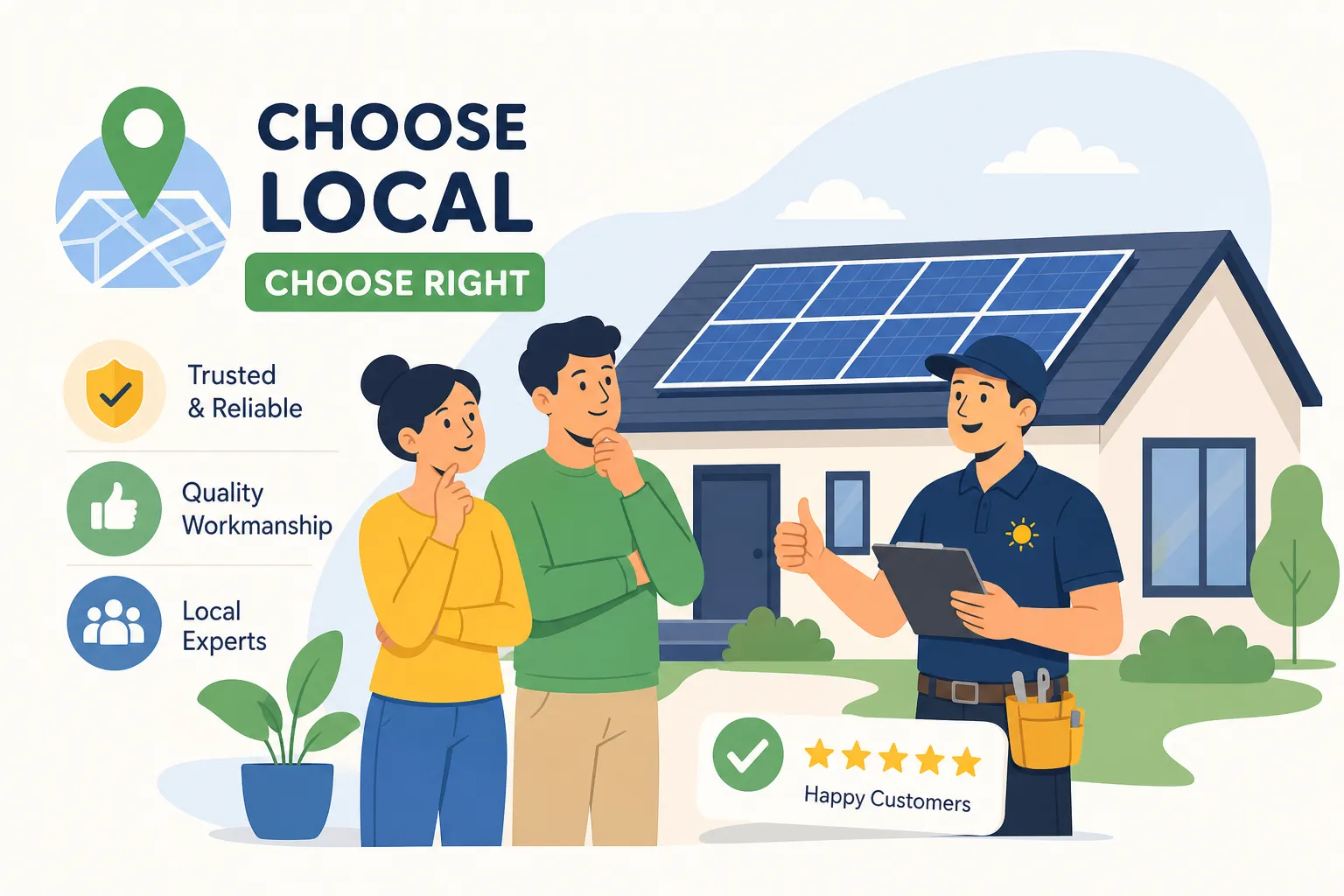
Searching Google for "local solar installers" or "solar installers near me" and picking the first three results is not the same as knowing whether any of them are actually trustworthy. Most homeowners focus almost entirely on price and overlook the credentials, warranties, and aftercare that determine whether a solar investment pays off over 25 years. With many solar installation companies active across the UK right now, the gap between a well-executed job and a substandard one can cost you significantly in lost output, repairs, or voided warranties.
Services like Go Solar UK exist precisely to take this burden off homeowners, connecting people with pre-vetted, MCS-certified local solar companies for free. But if you want to understand the full picture before making any decisions, this guide covers everything worth checking before you sign anything.
Why your installer choice matters more than the panels themselves
A solar panel's 25-year performance warranty only holds up if the installation meets manufacturer and certification standards. Poor mounting, incorrect cable management, or an undersized inverter can degrade system output significantly, and issues can sometimes go unnoticed for months or even years. The equipment is only as good as the person fitting it, which is why choosing the right installer matters far more than agonising over panel brand.
Choosing a local residential solar installer isn't just about convenience at the point of sale. If something goes wrong after installation, a panel fault, an inverter issue, roof penetration leaks, you need someone who can respond quickly, not a national call centre that may route your job to a subcontracted engineer some weeks later. Local solar panel fitters with a genuine regional presence are often able to provide faster, more localised aftercare and quicker response times, and that accountability is worth a great deal over the life of a system.
Choosing Local Solar Installers: Credentials to Check
MCS certification: the non-negotiable baseline
MCS (Microgeneration Certification Scheme) is the UK's quality mark for small-scale renewables, and any reputable installer fitting solar PV on a domestic property should hold current MCS certification. You can verify this directly on the MCS "Find An Installer" tool by searching for solar PV by postcode or region. For background on the scheme itself, see the MCS scheme details. Without it, you are likely to be ineligible to claim Smart Export Guarantee (SEG) payments for excess energy exported to the grid, SEG rules require the installation to meet MCS or equivalent standards, and some home insurance policies won't cover the system either. The MCS number should be something any legitimate installer provides without hesitation. Official guidance on registering energy devices explains the responsibilities for device owners and installers in more detail: register energy devices guidance.
Electrical competence: NICEIC and equivalent schemes
Solar installation is also electrical work, which means your installer needs registration with a recognised competent-person scheme such as NICEIC. This covers the electrical side of the installation independently of the MCS solar credential. Ask specifically which electrical scheme they're registered with, and confirm it's current, not just mentioned on a brochure from three years ago. A credible solar PV installer will have both credentials and won't find the question unusual.
TrustMark: an extra layer of consumer protection
TrustMark membership is not mandatory, but it's a meaningful indicator of consumer commitment. Installers who hold TrustMark status have agreed to standards around trading practices, customer care, and complaint handling. It won't replace MCS, but in a market where solar installation companies make confident claims freely, it acts as a useful additional filter when comparing your shortlist.
How to Compare Local Solar Installers' Quotes
For a typical UK home in 2026, a straightforward solar PV system costs roughly £1,500 to £2,200 per kilowatt installed. A 4 kW system, the most common size for a three-bedroom home, typically lands between £6,000 and £8,000 without battery storage. Prices at the very low end of this range are worth scrutinising closely; they often reflect cheaper components, less experienced installers, or missing warranty coverage rather than genuine efficiency savings. Prices vary depending on the size of the installation and a great many other factors. To find out how much it will cost for for a local solar installer to fit solar to your home submit a free quote request. You will get a free no obligation customised quotation without any pressure.
A credible quote from a solar PV installer should separate equipment costs, installation labour, inverter, scaffolding, and any DNO notification fees as distinct line items. Quotes showing only a single total figure make fair comparison impossible. Ask each installer to break it down fully and to confirm exactly which panels and inverter model they're pricing, so you're comparing identical specifications across multiple quotes rather than making assumptions.
National solar installation companies often bundle warranty administration into the headline price, which can make their quotes look higher even when the underlying hardware cost is similar. Local specialist installers may offer more flexibility on pricing but can vary on aftercare quality. The key questions to ask are: who handles warranty work, is it done in-house or subcontracted, and what's the typical response time for a service call?
Warranties and aftercare: the details that protect your investment
Reputable panel manufacturers currently offer product warranties of 10 to 25 years and performance guarantees of 25 to 30 years, typically guaranteeing 80 to 90% output at the end of that period. Inverter warranties vary more: standard string inverters carry 5 to 12 years, while microinverters can reach 20 to 25 years. If an installer is proposing panels with a warranty shorter than 20 years, ask why, it's a reasonable question and a confident installer will have a clear answer.
The workmanship guarantee is the coverage that protects you from the installer specifically, not just the manufacturer. MCS certification requires a minimum of two years of workmanship guarantee from a certified installer, that's the floor, not the target. Many reputable local solar installers now offer five or ten years as standard. A short workmanship guarantee is often the first sign that an installer lacks full confidence in the quality of their own work.
On timelines, most domestic solar panel installations take one to two days on site. The overall journey from first enquiry to a live, generating system is typically four to eight weeks, covering system design, equipment ordering, scaffolding, installation, and grid connection. For practical advice on how long an installation typically takes and what to expect on site, see guidance on notifying Distribution Network Operators (DNOs). If an installer is promising a job completed within days of your first call, ask how that's possible. Rushed timelines frequently reflect inadequate planning rather than genuine efficiency.
Red flags that should make you walk away
Any reputable solar installation company will give you the quote in writing and allow you time to compare it. High-pressure close tactics, such as "limited-time pricing" or "I can only hold this price if you confirm today", are a classic indicator of a sales-first operation with little interest in whether the system is actually right for your home. This is one of the most common complaints UK homeowners make about solar installers near me searches that lead to national aggregator sites, and it's entirely avoidable.
Before committing, check the MCS database directly. If an installer can't provide their MCS number, won't confirm their electrical certification scheme, and has no verifiable reviews on independent platforms, treat none of these as coincidences. A legitimate solar panel fitter with a track record of quality work will have no hesitation showing you their credentials. The three things to check before signing are:
- Active MCS certification for solar PV, confirmed via the official MCS installer search
- Registration with a recognised electrical competent-person scheme such as NICEIC
- Verifiable reviews on independent platforms, not just testimonials on their own website
Any guarantee that isn't written into the contract simply doesn't exist. Be especially cautious if an installer is reluctant to provide full equipment specifications, documentation, and MCS registration confirmation in writing before you sign. If an installation company goes out of business after your installation, a properly registered MCS certificate is one of the few forms of protection you have remaining.
How Go Solar UK removes the vetting legwork entirely
Go Solar UK, About Us is a free service that connects UK homeowners with up to four pre-vetted, MCS-certified local solar installers. Every installer on the platform has already been checked for the credentials covered in this guide. You don't have to verify MCS numbers, chase electrical certifications, or untangle vague quote formats yourself. The service is funded by the installers, so it costs homeowners nothing at any stage of the process.
Rather than sending your details to the cheapest installer available, Go Solar UK starts with a bespoke system design tailored to your roof orientation, energy usage, and lifestyle. If you want to read more about system design fundamentals and practical planning, see our Solar Power in the UK guide. The quotes you receive are based on what your home actually needs, not a generic package applied to every property on the street. There's no obligation to proceed at any point, and the service is designed around your decision-making timeline rather than a sales target. It's the most straightforward way to shortlist trustworthy local solar companies without spending a weekend doing your own research.
Getting this right from the start
Finding reliable solar panel installers near you doesn't have to feel like a gamble. The fundamentals come down to three things: the right certifications led by MCS, clear and itemised quotes with written guarantees, and a company with a genuine local presence and a verifiable track record. Rushing past any of these checks to save time at the start often costs far more at the point where something goes wrong.
If you'd rather skip the vetting process entirely, Go Solar UK handles it for free. You get a system designed for your specific home, quotes from up to four MCS-certified local solar installers in your area, and honest savings projections, all without a single pushy sales call. Whether you use this guide to do it yourself or let Go Solar UK do the groundwork, the right local solar installers are out there. With the right checklist, you'll recognise them quickly. If you have further questions about the process, see our comprehensive FAQ.